
How Neurofeedback Helps
Neurofeedback provides measurable, real-time feedback that allows individuals to retrain the brain’s response to stressors and stimuli. It has proven useful across clinical and non-clinical settings, supporting both mental health treatment and peak performance enhancement.
Applications include:
-
Treating emotional and sensory dysregulation
-
Supporting Autism Spectrum Disorder and ADHD
-
Enhancing performance in sports, music, and creative arts
-
Improving attention, stress tolerance, and emotional balance
-
Recalibrating pain perception through brainwave modulation
Biofeedback instruments may also be used in tandem to monitor heart rate, breathing, skin temperature, and muscle tension—helping create a holistic self-regulation profile.
By strengthening self-regulation and emotional stability, neurofeedback empowers individuals to function with greater confidence, clarity, and calm.
Understanding Dysregulation
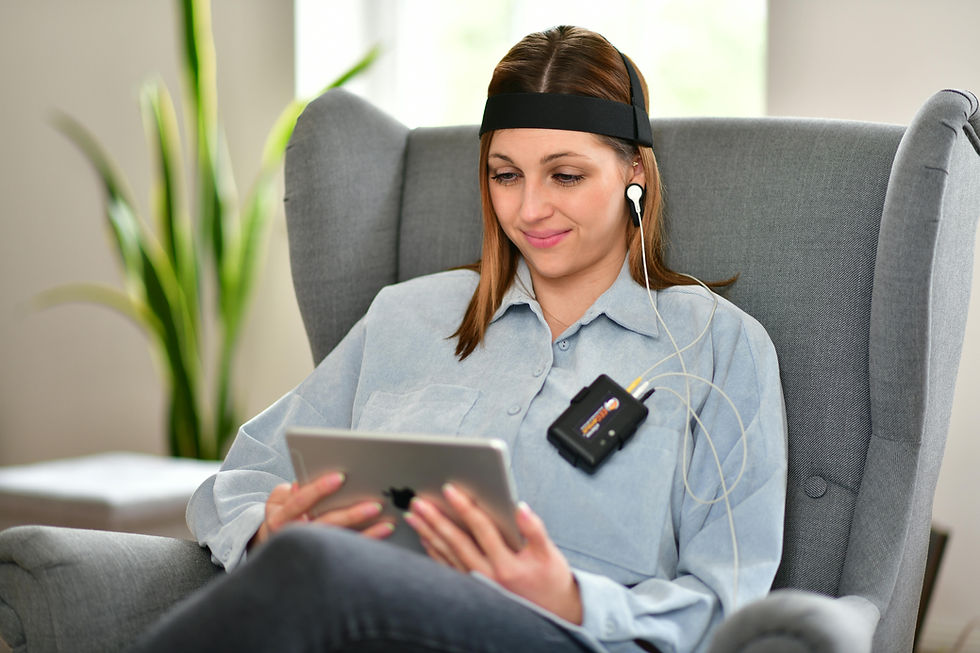
Neurofeedback targets several forms of dysregulation—emotional, mood-based, and sensory—that often interfere with daily life, learning, or social connection.
Emotional Dysregulation (Adults):
This involves heightened emotional responses or difficulty managing feelings such as sadness, anger, frustration, or irritability. These responses may fall outside of socially expected norms or become overwhelming in intensity.
Mood Dysregulation (Children):
Disruptive Mood Dysregulation Disorder (DMDD) is characterized by chronic irritability, emotional volatility, and frequent temper outbursts. Children with DMDD may struggle to function at school or at home due to impaired mood control.
Sensory Processing Dysregulation (Children):
Children with sensory processing issues may be overly sensitive to everyday stimuli—common sounds may feel painful, or light physical sensations like clothing may cause discomfort. These challenges can impair learning, behavior, and social interaction.
Studies have shown that children with sensory processing difficulties, particularly those on the autism spectrum, often exhibit brain-based dysregulation in areas responsible for interpreting sensory input and social cues.

Neurofeedback Therapy
Non-invasive brain training for emotional, sensory, and cognitive regulation
Psychological testing is a structured and evidence-based process used to evaluate an individual’s cognitive abilities, emotional health, behavioral functioning, and learning profile. These evaluations are administered, scored, and interpreted by licensed professionals with clinical expertise.
Each assessment integrates test results with a comprehensive review of psychological, medical, educational, and personal history to ensure accuracy and relevance. Testing is never used in isolation but as part of a complete diagnostic process that informs treatment planning, academic support, or legal documentation.
Neurofeedback—originally known as EEG biofeedback—is a specialized form of biofeedback therapy that uses real-time EEG data to train the brain to self-regulate. This method helps individuals improve control over neurophysiological functions by reinforcing desirable brainwave patterns and reducing dysregulation.
During a session, the neurofeedback system reads brain activity through sensors and instantly feeds that information back to the individual. In collaboration with a licensed clinical provider, the individual learns to enter and maintain a calmer, more regulated brain state. This calm state lays the foundation for better emotional control, improved cognitive processing, and increased openness to therapeutic guidance.